
thermodynamic-computing · kt-bit · self-organization · physical-intelligence
Chapter 3: The Thermodynamic Bit
Nature builds with one primitive, at every scale, and you've stared at it your whole life without actually seeing it.
By Alex Nugent ·
I want to introduce you to a building block—or more accurately a ‘builder block’—that you have been staring at your whole life without seeing. The world around you is made of atoms and molecules and cells—but it’s constructed by thermodynamic bits. You have likely been taught about the bricks, but not the bricklayer.
What I write below is how I have come to see dissipative self organization in Nature, after more than two decades of staring at the problem and helping to launch, advise, and run DoD programs that explored this territory both directly and indirectly. I’m pointing at a pattern—a process—that repeats across wildly different scales. Once I have described this pattern in Nature I want to set down a computational primitive—the thermodynamic bit, that will bring dissipative self organization into our electronics. We will use it to assimilate neural networks.
Since writing “thermodynamic” over and over is a chore, I’ll just abbreviate it as “kT”.
The day I started seeing it everywhere#
When I first started this journey, I did not realize that “differential pair memristors” were just one manifestation of a much broader pattern. That only dawned on me after the launch of DARPA SyNAPSE as the ground work was laid for the DARPA Physical Intelligence program. I dug deeper into self-organization in the natural world, became better read, and was introduced to some incredible people. Although I had already reduced anti-Hebbian and Hebbian (AHaH) plasticity to differential pair memristor circuits, I tried to map it to something more basic, like the flow of a gas, a la more traditional thermodynamics. I sketched out this diagram, which is Figure 1 of the PLOS ONE AHaH Computing paper.
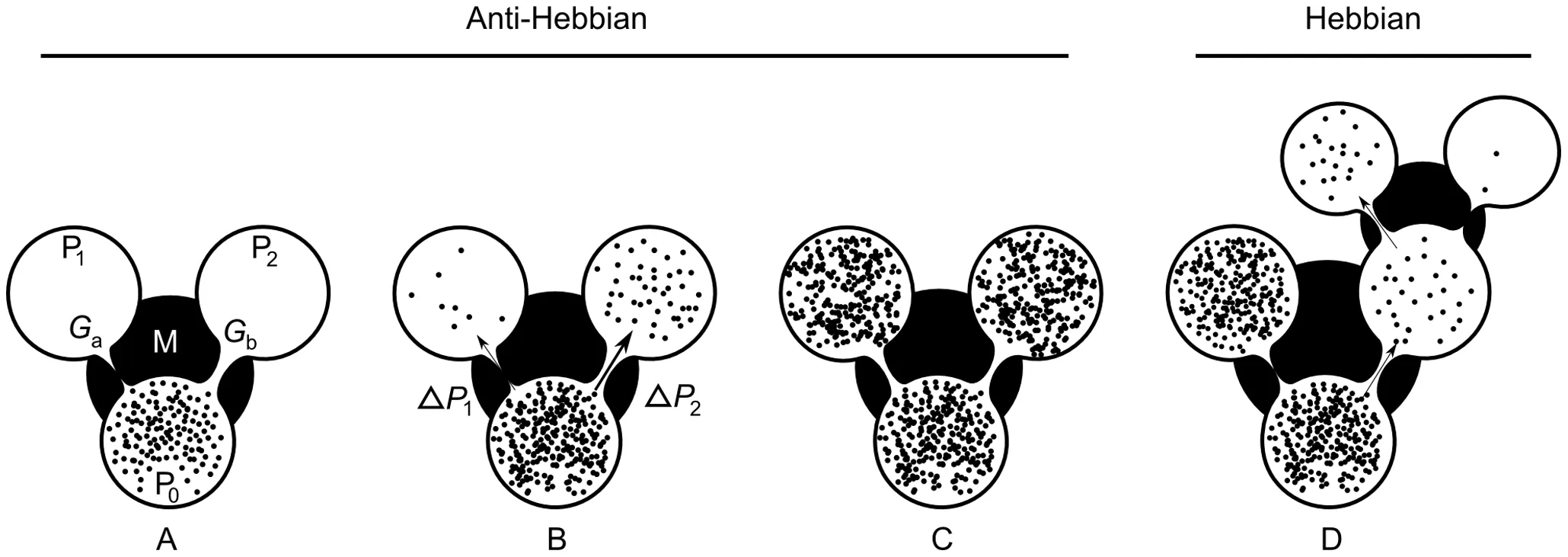
I envisioned it as a competitive growth or exploration process, where energy potentials drive a bifurcation process that locks on (Hebbian) or branches (Anti-Hebbian). With one simple assumption—that the dissipation pathways compete over conduction resources—I obtained AHaH plasticity. You could think of it perhaps like a “steam engine in a container of silly putty”. In this figure, the competition over conduction resources comes simply from the container’s conserved volume. As one pathway (hole) grows larger it must close up the other. The competition could come from many different types of processes, and it does not have to be a zero-sum game.
After sketching out that diagram I looked out the window to the large pinyon tree outside my office, its branches reaching to the sky, echoing back what I had just drawn. My jaw literally dropped and to the outside world I probably stood there comatose for ten minutes as the dominoes dropped, one after the other, around and around in my mind.
I realized that the entirety of the dissipative self-organized world, including all life but also “non-living” things that seem alive like lightning in slow motion, rivers, or Alfred Hubler’s ball bearings—are all built out of adaptive competing conduction pathways.
It’s hard to describe that moment of my life. For weeks I was dumbfounded by what I was seeing. I realized I had never really “seen” the natural world before. Before that moment it was a large, discontinuous collection of facts. After that moment I saw a type of unity to Nature and the Universe, a structure and pattern that repeats itself at all these scales, a building block of self-organization.
Before that moment I had thought that the only building blocks of nature were atoms and molecules and, somehow, DNA and cells, but I didn’t understand how it mechanistically held itself together. Suddenly I saw a thermodynamic building block of self-organization. It was everywhere and it was obvious and I was totally blind to it for my whole life up until that moment. That I could suddenly perceive something that surrounded me my whole life makes me wonder how blind we all are to other aspects of Nature and reality.
A different kind of thermodynamics#
When I speak of “thermodynamics” the images in my mind are probably not what you’re picturing, but that will change. I am part of a growing community of thinkers that see it differently. I’m not talking about steam boilers. I’m talking about the ability of matter to self-organize to dissipate free energy and the structures that it forms as it does this. This has been, historically, more of a ‘fringe’ field of thermodynamics, but it seems acutely obvious once you can finally see the thermodynamic bits around you.
That community has roots, and it cuts across disciplines and centuries. Alfred Lotka argued as early as 1922 that natural selection favors whatever captures and dissipates energy fastest. Erwin Schrödinger asked What Is Life? in 1944 and answered that an organism stays alive by feeding on negative entropy —it holds its own order together by drawing order out of its surroundings. Ilya Prigogine, a chemist, won a Nobel for showing that matter pushed away from equilibrium spontaneously organizes into what he named dissipative structures—order that exists only because energy is flowing through it, and that vanishes the moment the flow stops. More recently, Jeremy England, a physicist, carried the same intuition forward as dissipation-driven adaptation: drive matter hard enough, long enough, and it tends to rearrange itself to dissipate the drive better. Rod Swenson and Sven Jørgensen, coming from systems theory and ecology both landed on a selection principle—the system takes the path that drains the potential fastest. Howard Odum built an ecology on the same maximum-power idea, and Eric Schneider and Dorion Sagan put it bluntly: nature abhors a gradient.
A system will select the path or assembly of paths out of available paths that minimizes the potential or maximizes the entropy at the fastest rate given the constraints. —Rod Swenson
Edward O. Wilson had a word for what happens when fields this far apart keep arriving at the same doorstep: consilience, “a jumping together of knowledge by the linking of facts and fact-based theory across disciplines to create a common groundwork of explanation.” A chemist, a physicist, a systems theorist, an ecologist—each describing one face of the same primitive without quite saying so. The kT-bit is my attempt to name that primitive and build a computer out of it: Free energy dissipation pathways competing for conduction resources. These thinkers don’t agree with each other, and none of them is vouching for the kT-bit. That so many arrived at the same doorstep from different fields tells me the territory is real. The carving is mine, and it’s the part I’m putting up for judgment.
Free energy dissipation pathways competing for conduction resources. -Alex Nugent
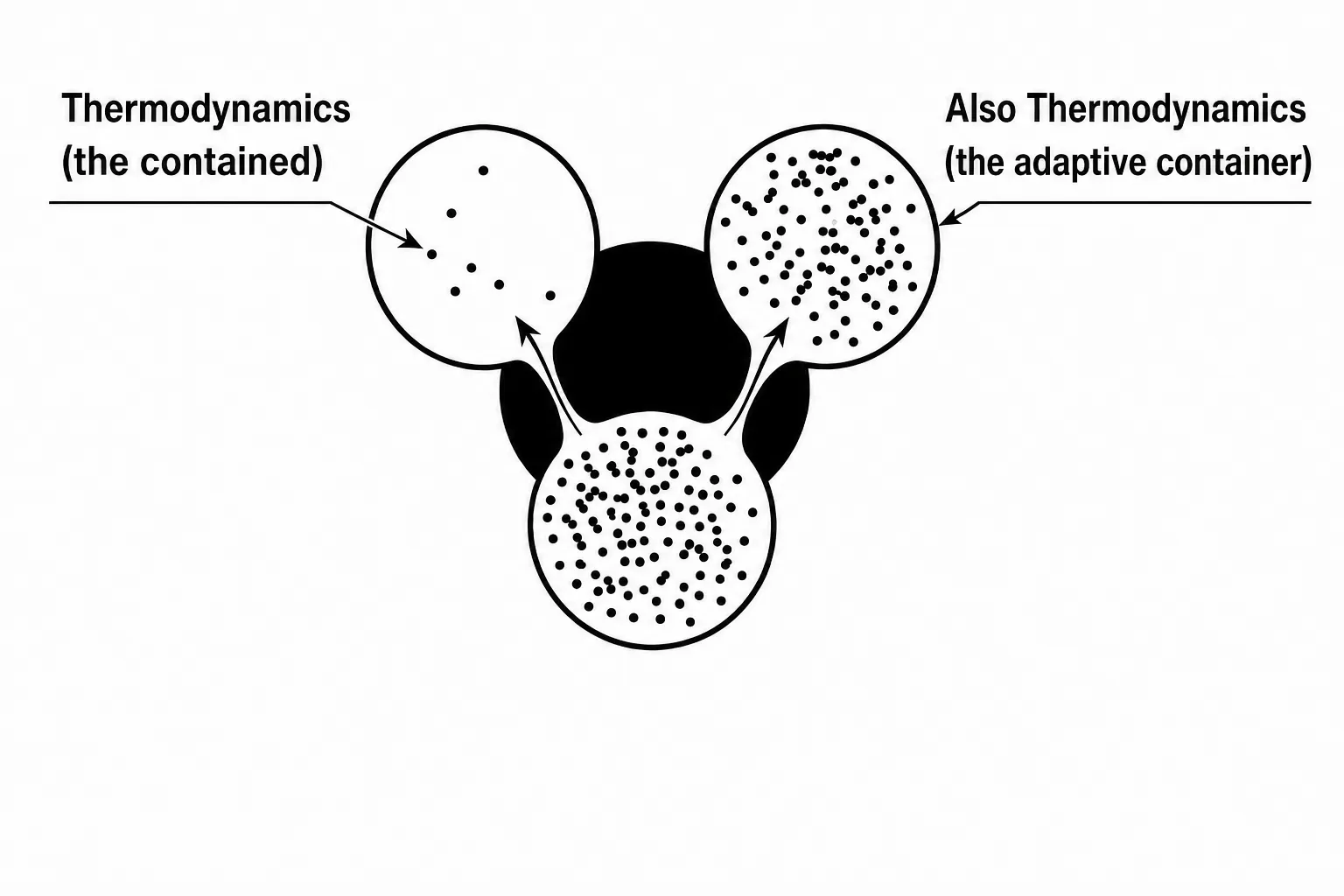
Back to the traditional view: most people think of “hot gas” and its flow through rigid or highly constrained pathways, like a piston perhaps. They speak of ‘increasing entropy’, ‘micro-states/macro-states’ and ‘partition functions’ . But there is another way to view thermodynamics, and that is through the lens of how the stuff that contains the energy flow changes from that flow. The “container” vs “the contained”, the “yin” vs the “yang”. Life, for example, is an adaptive (“plastic”) container for the flow of energy, mediated by various flow particles (water, sugars, blood, air, neurotrophins, ATP, etc). Lightning, and Hubler’s ball bearings, are adaptive containers for the flow of electrons. Rivers, the channels of rock and clay and sand that contain the flow, are adaptive containers for the flow of water powered by a gravitational potential.
What is a kT-bit and how does it work?#
A kT-bit can form anywhere free energy is trying to dissipate, has more than one adaptive pathway to dissipate through, and those pathways must compete for the resource that carries the flow. Wherever you find that situation, you have found a kT-bit. It is a point where an energy-dissipating container bifurcates to explore competing paths. It may collapse quickly, or not, and it will live for a while and at some point it will die.
A particle flows#
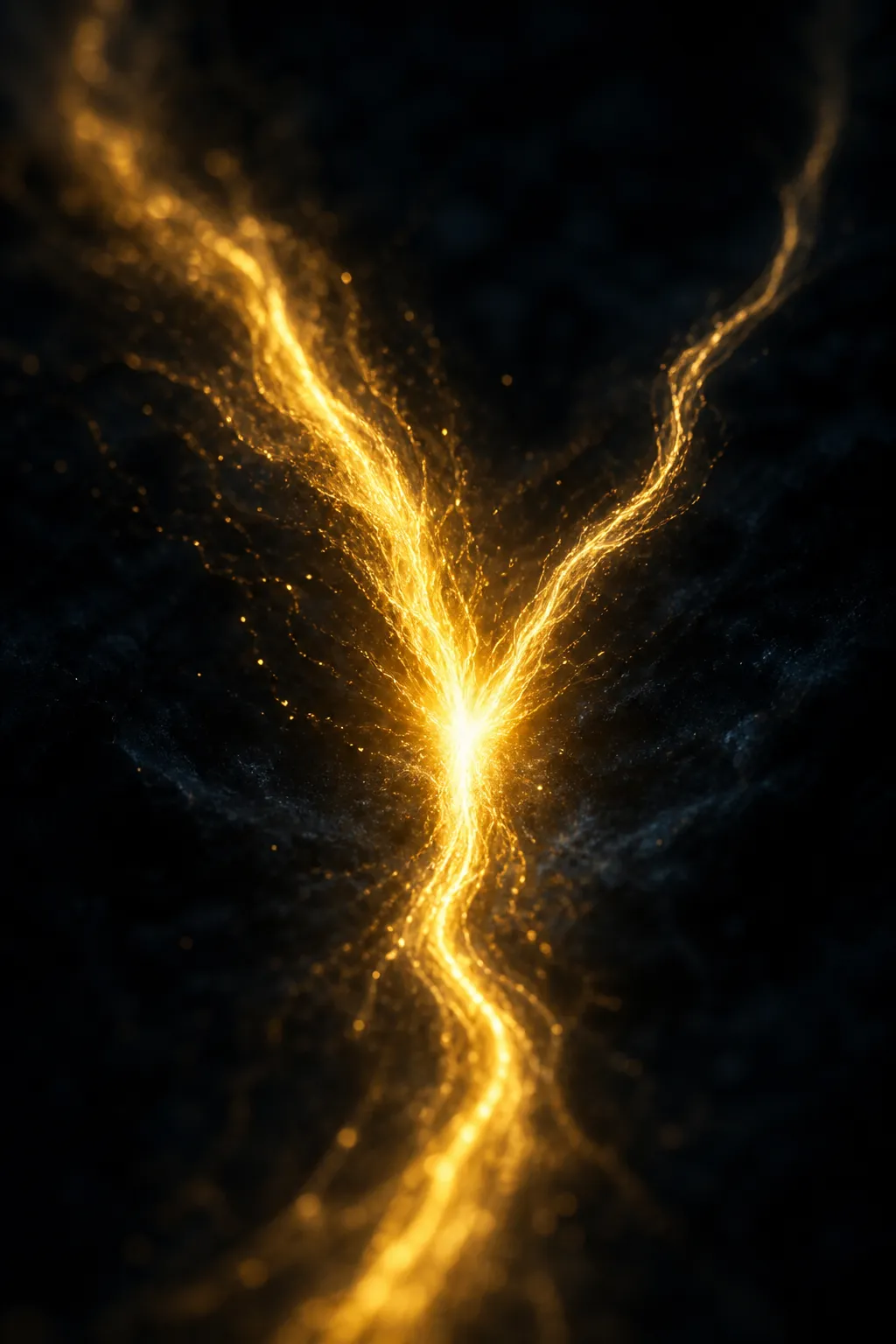
In every case there is a particle moving through the structure. Sometimes it is a direct carrier of the free energy being dissipated, like an electron in a lightning bolt. Sometimes it does not carry the energy itself but gates access to energy dissipation—like money, for example. Water, Sugars, Blood, ATP , Air, Neurotrophins —for every manifestation of a kT-bit you should be able to identify the particles that flow through it. In some cases, the particles that flow and structure that contains it are built of the same stuff. The flow of that particle is what the pathways are competing over, and the rate of that flow is either directly or indirectly a measure of the dissipation of free energy.
Competition#
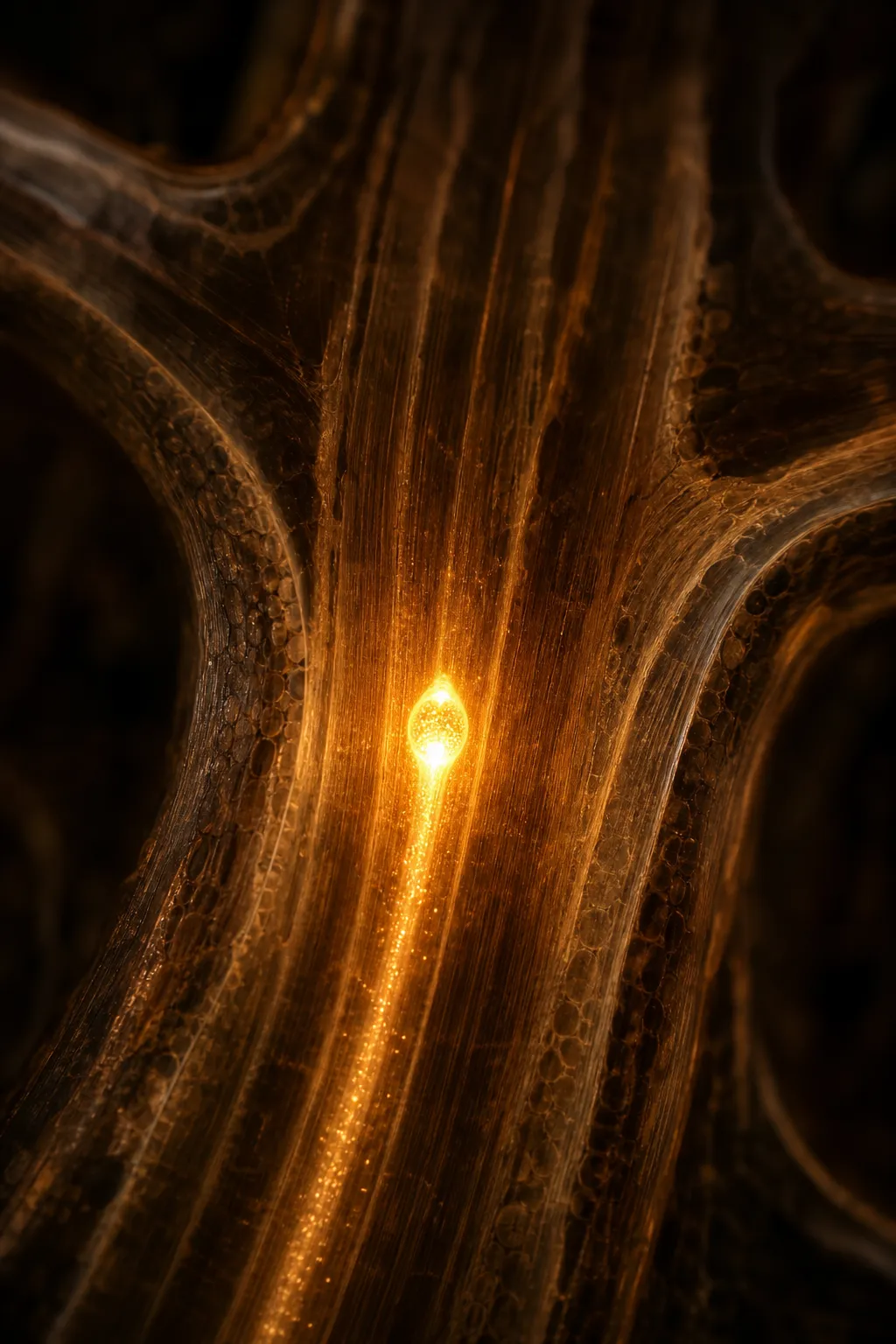
When I say the pathways “compete”, I do not mean that one can only grow if the other shrinks. That could happen, but it is not required. The two branches of a tree can both thicken as the tree grows, constructing itself by tapping the resources and energy in the flow. When we build a kT-bit from a pair of memristors, both memristors can grow in conductance at once. They might both grow, one faster than the other; they might both shrink, one faster than the other; or one can grow while the other gives ground. What makes it a competition is that they are vying over the energy contained in the flow. The flow can (and will) change over time and it need not be a zero-sum competition.

Alive or dead#
Let me define alive precisely: free energy is dissipating through the structure. Nothing more, nothing less. By that definition a river in flood is alive and a dry riverbed is dead, and I mean that literally, not as a figure of speech. Cut off the flow and it dies. Note that this invokes the concept of time. A river might flow only during the rainy season, for example, so to answer the question “is it alive” you must also define the period over which you measure it.
I mean this as strongly as it sounds, so let me be exact about the kind of claim it is. I am not reporting a measurement here. I am naming a pattern and betting it is the same pattern every time. What follows is that bet, argued as sharply as I can make it, so you can decide whether it’s a good one.
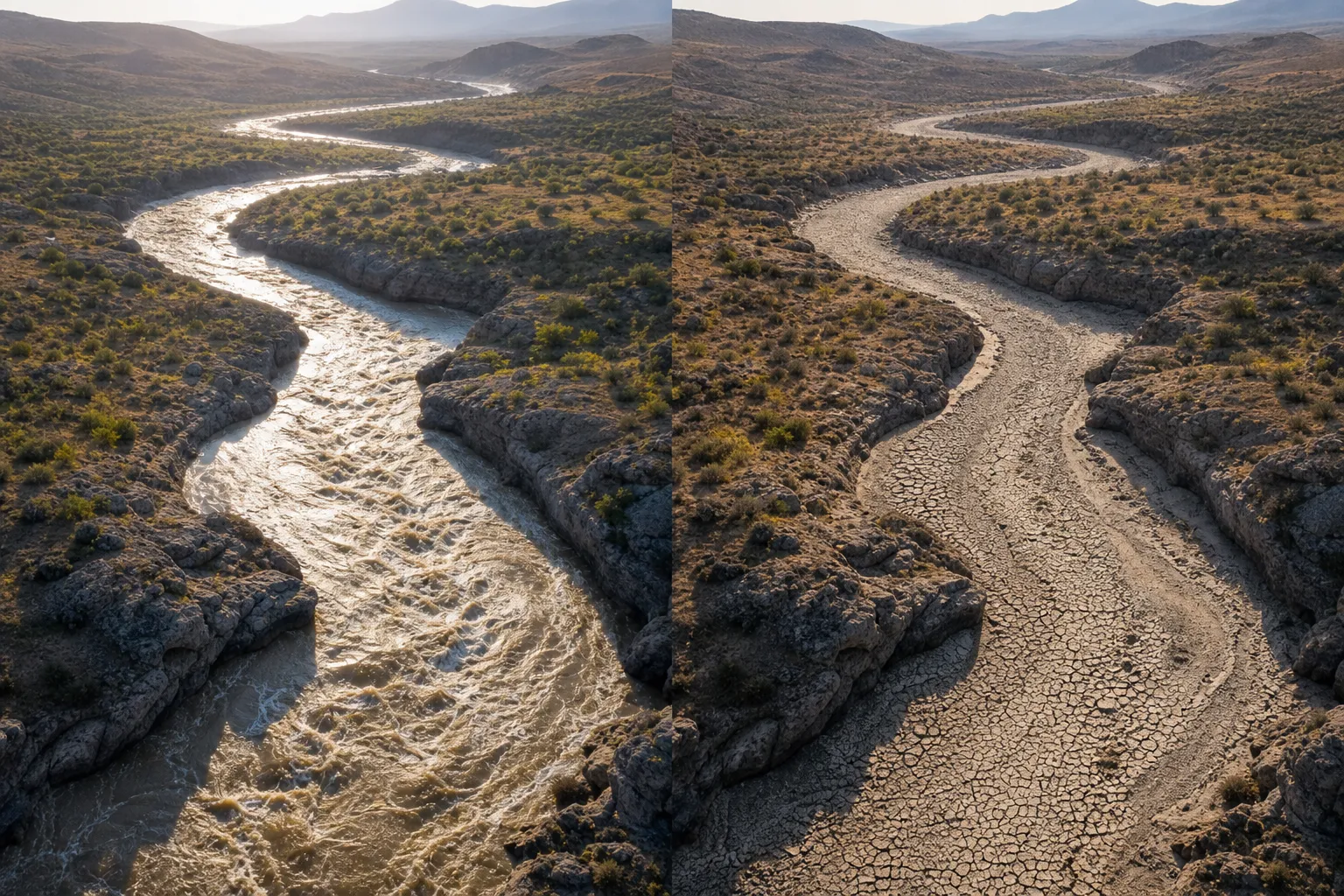
Adrian Bejan built a whole law of physics he calls the constructal law—the claim that any flow system persists by reshaping itself to pass its currents more easily.
“For a finite-size system to persist in time (to live), it must evolve in such a way that it provides easier access to the imposed currents that flow through it.” —Adrian Bejan
I disagree slightly with Bejan here. I don’t think that “to live” implies that the living system must provide easier access to the currents that flow through it. Living systems can and do organize to dissipate more energy. But they are not the same thing. In my view any collection of kT-bits that are dissipating energy are alive, and furthermore if those kT-bits have not yet collapsed then they have “physical intelligence”. Physical intelligence acts to create structure from matter to dissipate free energy in the environment. It’s a natural force or process that explores options and locks onto solutions, and it looks like this:
Mixture and collapse#
What makes a kT-bit “collapsed”? Whether it still feeds two paths or only one. If it still mediates the dissipation of energy down both pathways—even if almost all of it goes one way and only a trickle goes the other—then it has not fully collapsed. I call that undecided state a mixture: the structure holds some degree of both a “1” and a “0” at once. When one pathway takes everything and the other dies, the kT-bit has collapsed to a single state.
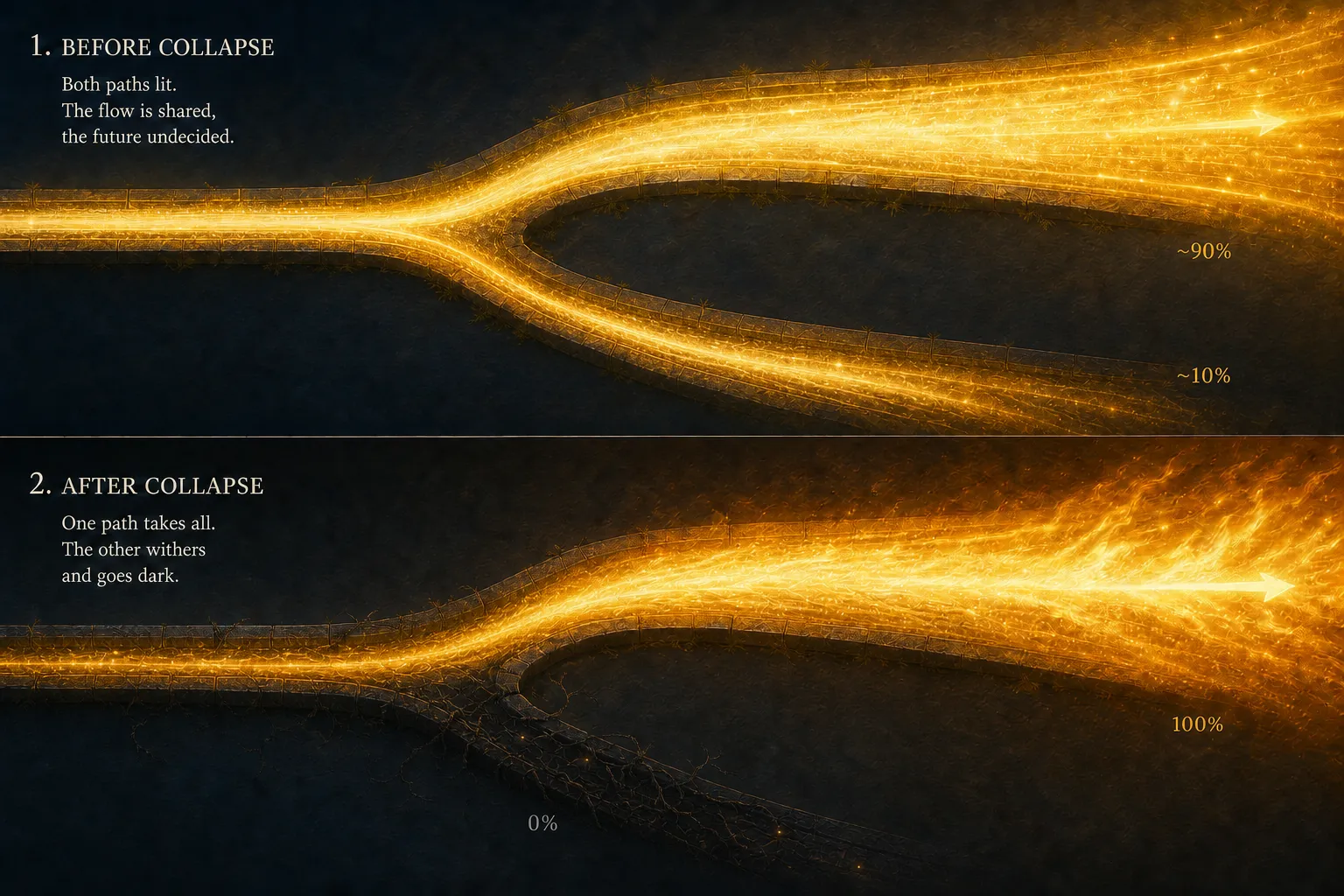
I am going to deliberately not call the mixture a “superposition.” That word drags along too much quantum baggage, and a kT-bit mixture does not imply quantum coherence (but the similarity is interesting isn’t it?). The mixture is a real structural state of matter, and it is far more robust than the extremely fragile quantum qubits.
Hebbian and anti-Hebbian | Positive and Negative feedback#
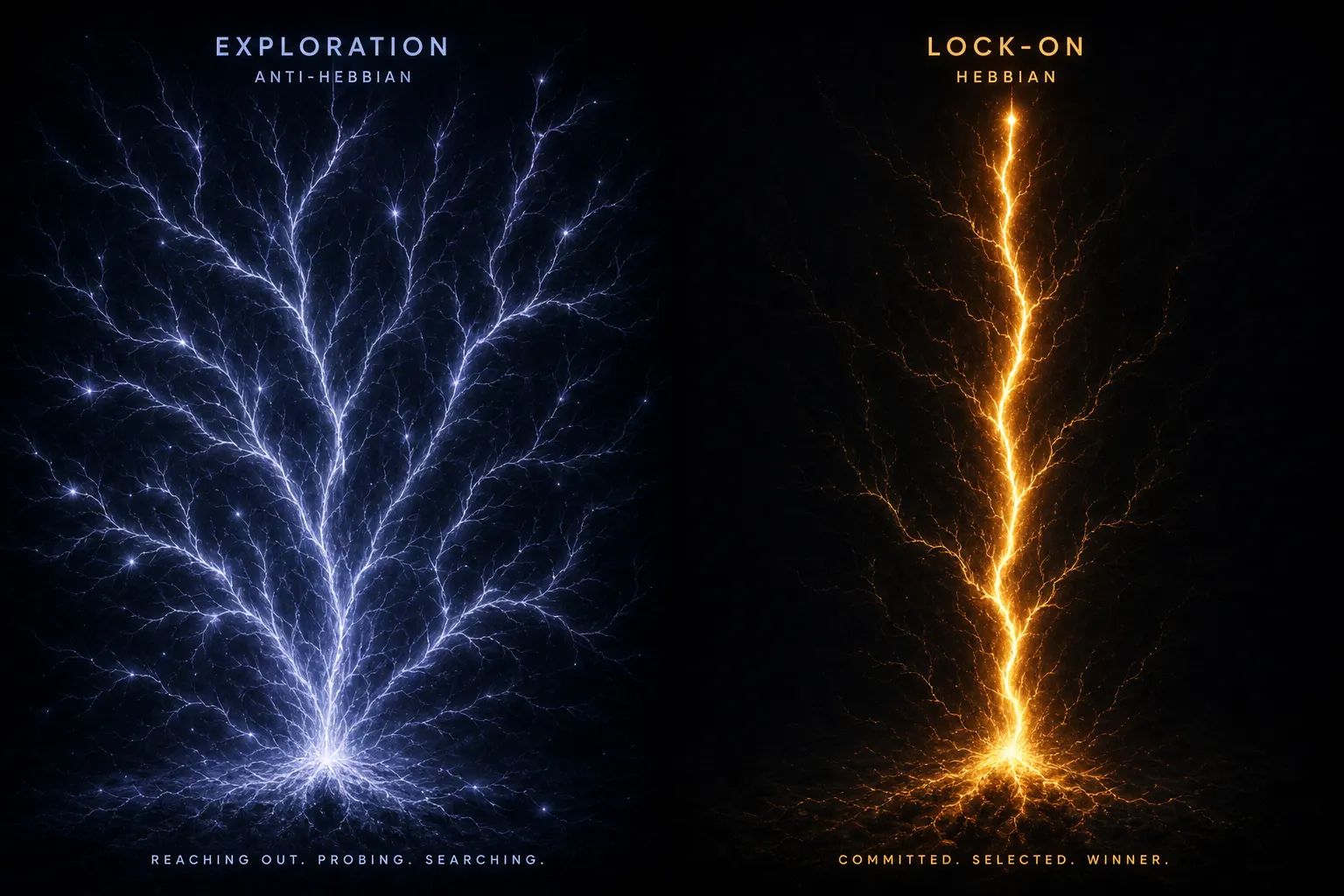
So we have two knobs. Drive the competition so that one pathway wins, gets stronger, which helps it win more, etc, and the kT-bit locks onto a decision: that is Hebbian feedback, positive feedback, aka “locking on”. When the lightning bolt in the above video finds its path to ground, it transitions from exploration (anti-Hebbian) to exploitation (Hebbian). The key transition point where this occurs is when the structure (the branches of the lightning) find a path to dissipation. Once that occurs, the kT-bits will start their collapse and the path will be selected, emerging from the mixture.
You will notice how generally I view Hebbian learning now, as something much more general than “neurons that fire together wire together.” This really annoyed the reviewers of the PLOS ONE paper, and perhaps it annoys you too. Sorry. Such is how I came to understand the situation, first trying to map neural networks to physical circuits and later acquiring a more general understanding of self organization. I am now in the humorous position of pointing to lightning and saying look—AHaH plasticity! Which of course makes no sense to most people.
Drive a kT-bit to collapse with positive feedback to lock onto a solution, pull it apart with negative feedback when we want it to keep exploring the space.
Reading a kT-bit#
A kT-bit is evaluated by the particles that flow through it. The kT-bit holds the mixture—or perhaps stated differently is the mixer. The structure only sets the odds—the flowing particles pick the outcome. While a kT-bit holds a mixture you can evaluate it many times and get different answers: left or right, true or false, 1 or 0. Once it collapses, it evaluates the same way every time. Once it dies, it can no longer be evaluated at all. Alive and mixed, alive and collapsed, or dead. I am not using these words metaphorically. These are defined states of matter that can be measured.
Take the vantage point of a single particle that is flowing. Imagine we are a water molecule traveling up the trunk of a tree toward the leaves on a quest to be reunited with the clouds. When we encounter the first bifurcation we can go right (1) or left (0), and the probability of each direction is related to the relative size and health of the two forks. If they are both equal, we have a 50% chance of ‘evaluating’ right or left. If the right fork is dying—perhaps lightning struck and burned it—or perhaps left fork hit a nice patch of consistent sunlight and formed a thermodynamic sink with a higher potential gradient, then our path will be biased to the left and we will more likely ‘evaluate’ to a 0.
Evaluation and harvest#
Picture that same water molecule, but flip its journey. It has fallen as rain on a hillside and is heading downhill toward the sea. Now the forks run the other way. Tributaries don’t split in front of it, they merge into it. Every junction it reaches is a confluence, two streams becoming one, and a confluence is not a decision because the molecules of water have nothing to pick. Follow it all the way down a river basin and it never once “evaluates” a branch. So does the kT-bit fall apart the moment we run the flow backward?
It doesn’t fall apart—you just have to look one level up to find it. The choosing fork hasn’t disappeared; it has climbed to the ridgeline. Picture a raindrop landing square on a divide: it rolls down into the basin on one side or the basin on the other, and which way it goes is set by the relative pull of the two basins below—a fork, a 1 or a 0, exactly like the water molecule at the tree’s first bifurcation. That is where a drainage gets evaluated: up at the divides, where each drop of rain is awarded to one basin or its neighbor. Everything below the divide has stopped choosing and started harvesting—each basin gathering the rain it won and funneling it to the sea.

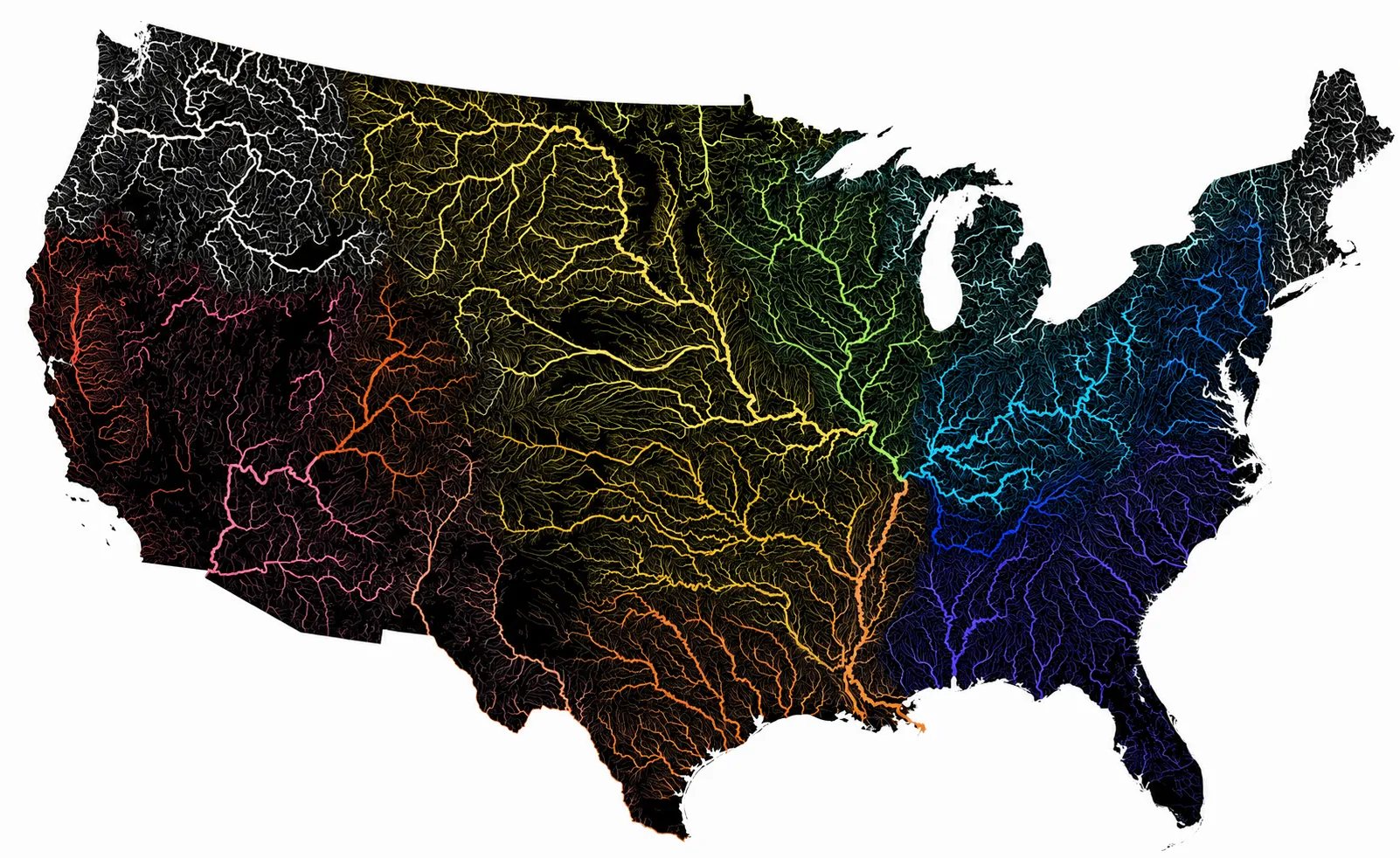
The competition that built the tree is still here, renormalized to a coarser scale. The competing branches are whole sub-basins, and what they fight over is rainfall, with the atmosphere as the reservoir dealing it out across the continent. A basin that erodes back into a ridge faster steals its neighbor’s headwaters, drains more water, erodes faster still, and takes even more. Geologists call it stream capture, and it is the same winner-take-flow feedback—Hebbian plasticity—that thickens one branch of a tree while the other gives ground, only run on geology’s clock. The one thing that changed is what the branching is for. Flowing out toward the branches it evaluates, and a particle’s path is selected as the system explores. Flowing into the drainage it harvests, gathering a scattered resource in a space to a point. Same kT-bit, pointed in opposite directions.
But harvest mode is not fixed. It holds only as long as the water keeps flowing downhill, and the explore state sits latent in every drainage, waiting for a blockage to switch it on. Dam the channel and the harvest stalls: a pond backs up, then a lake, and the system fills with potential energy until the surface tops the lowest lip of its basin and spills, exploring the alternate paths around it. Once water finds a new line, its erosive force cuts it deeper, the lake drains, and Hebbian collapse takes over again—one path winning everything.
A delta is this same trick. The river meets the sea and it drops its sediment, spreads, and splits into the distributaries of a delta—and choice comes back, a grain of sand at the delta head facing a real fork again. Both feedback knobs show at continental scale: a distributary that wins more flow drops more sediment, builds its own bed up above the plain, loses the gradient that fed it, and the river avulses to a lower path. Hebbian collapse, one channel taking everything, followed by anti-Hebbian reset, the win destroying its own advantage. The Mississippi has switched its delta lobe roughly every thousand years doing exactly this—a kT-bit cycling between collapse and mixture in slow motion.
You will start to see them everywhere#
A tree, a tornado, and two companies fighting over a market. The same process is running in all of them: free energy (or a token that gates access to it) finding its way through adaptive pathways (‘structure’) that compete for the particle flow. What changes from one to the next is the particle doing the flowing, the stuff it’s flowing through, and the timescale it flows on. The pattern is the same, from microscopic to macroscopic, across a ridiculously broad range of self-organizing systems. The structure mediates a choice from two options. The particle evaluates the options. The interaction between the particles, the structure, and the environment collapses or expands the options.
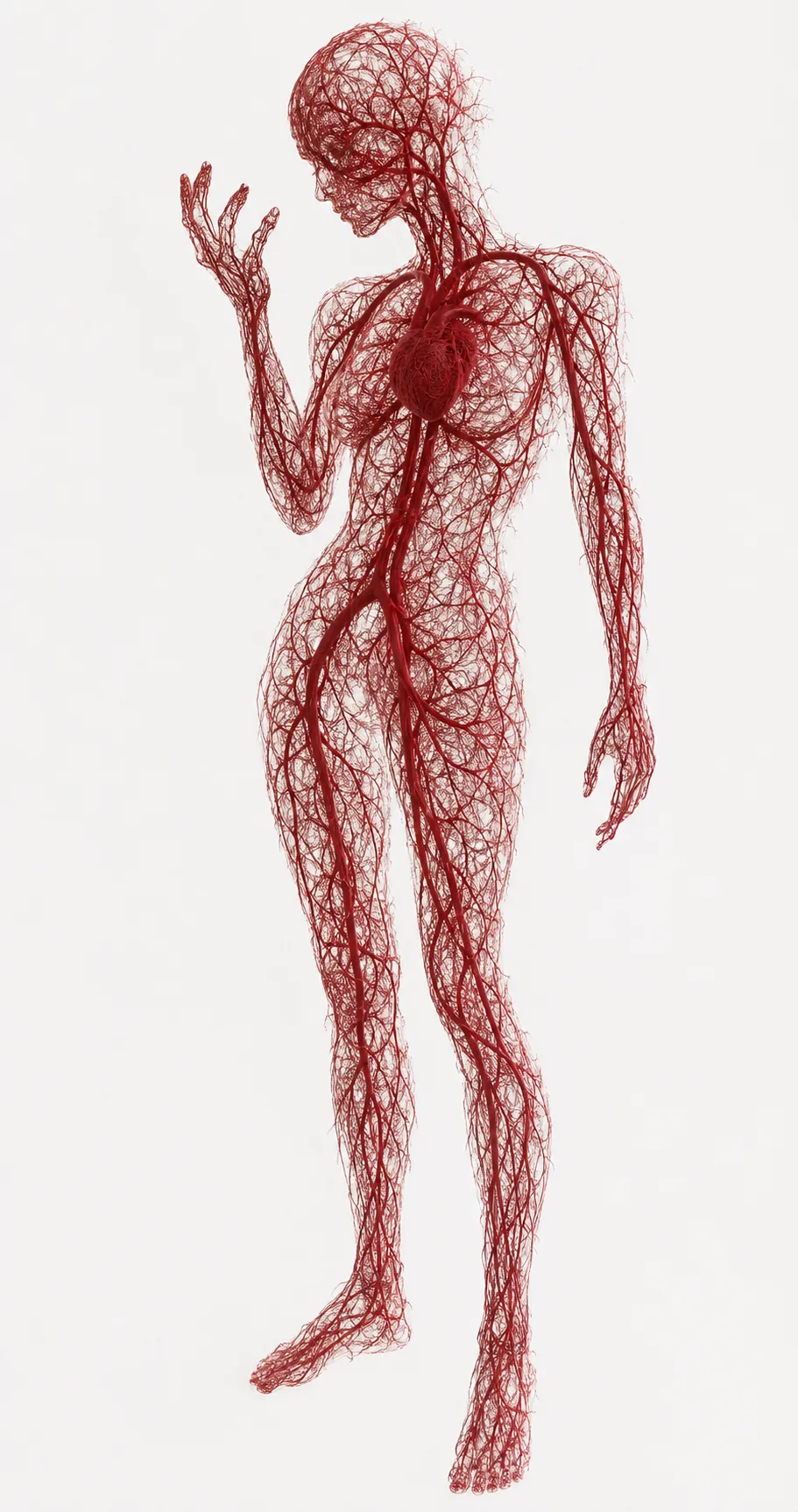
Look in the mirror. You are built of kT-bits. Your cells are the leaves on a forest of trees formed of kT-bits. Your lungs. Your arteries. Your brain cells. Even within your cells, the organelles (structure) compete over ATP (the particle).
Thermodynamic bits occur anywhere energy dissipates through multiple pathways that compete for the flow. With the help of AI, I have started a page to catalog the types: a kT-bit catalog.
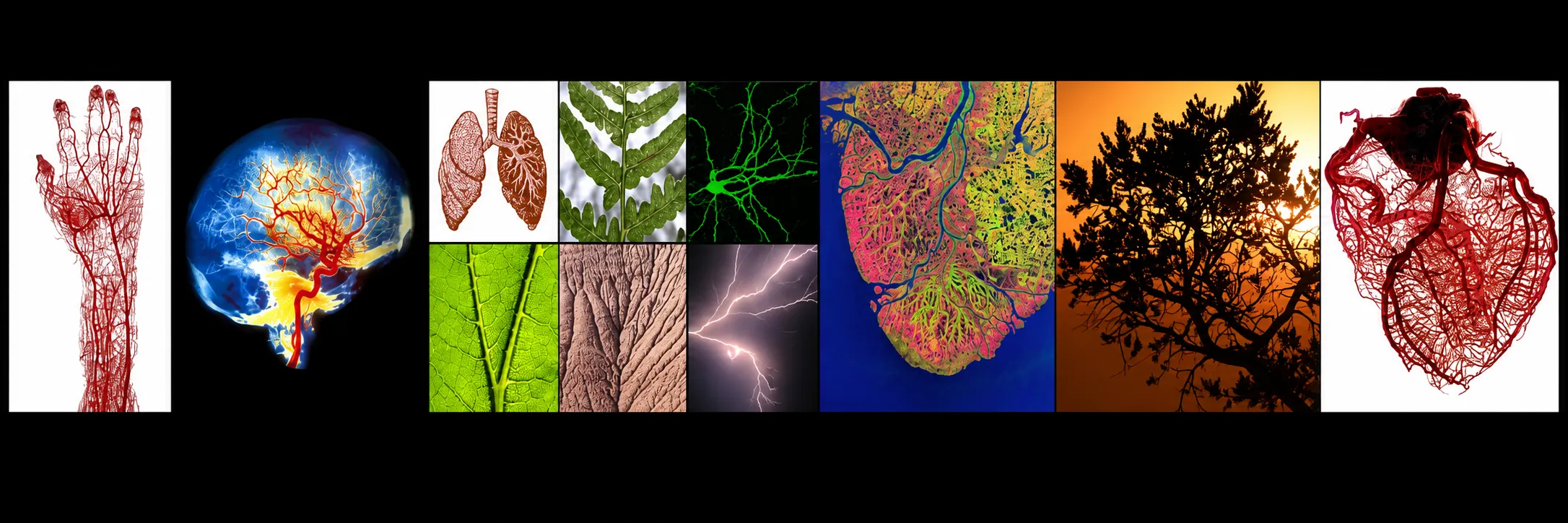
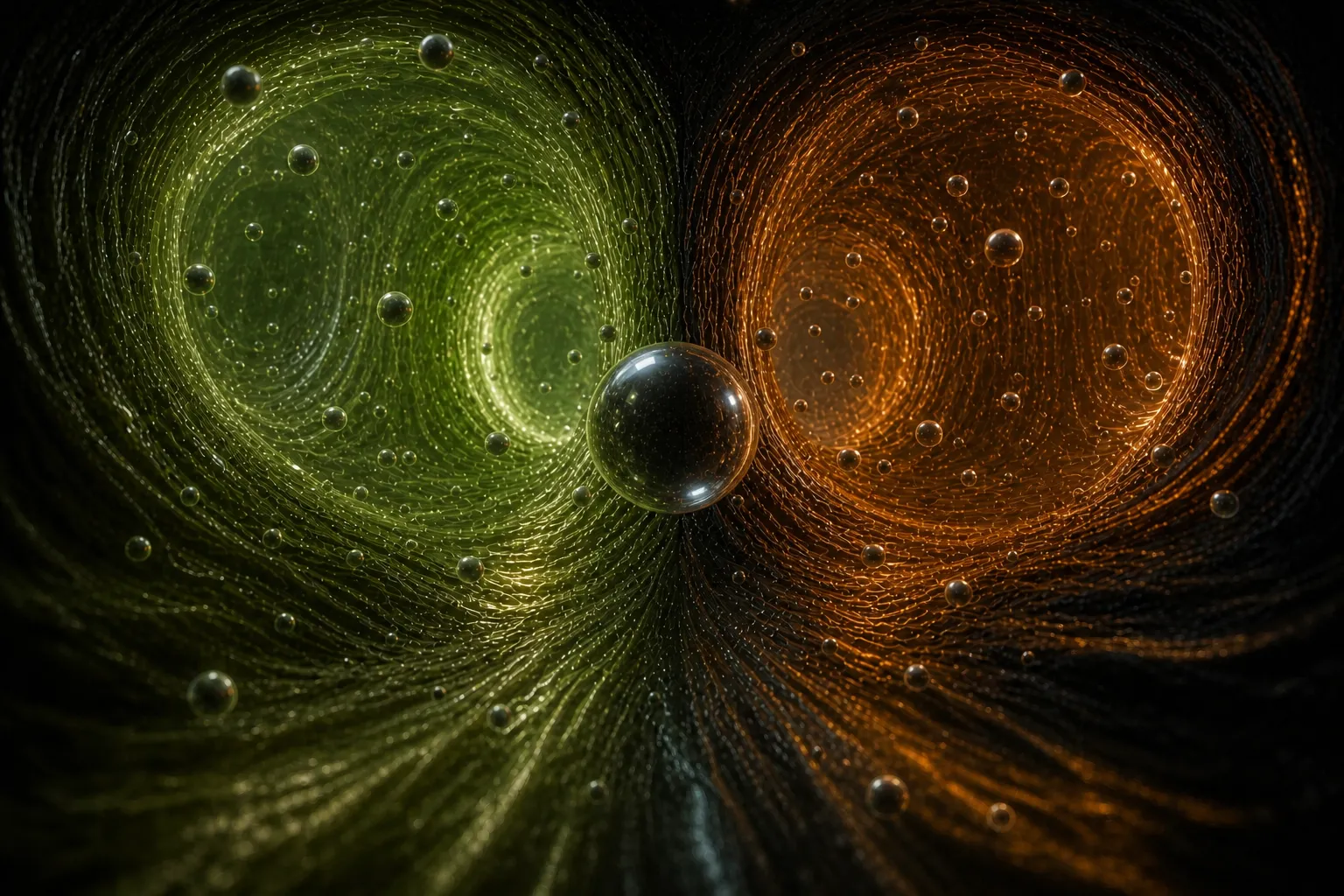
The branch shape is the easiest way to spot kT-bits. The deeper structure is not the visible fork, it is the competition between free energy dissipation pathways. The shape alone will fool you in both directions. A mud-crack network forks as cleanly as any river delta, but nothing flows through it—it’s dried-out stress relief, not a conducting pathway—so it’s dead shape, not a bit. A vortex does not look like a branch at all, yet it contains the same mechanism. Before the structure is fully formed there is a collection of gas molecules moving in a variety of directions, competing ‘curls’ or ‘spins’ within some defined space, surrounded by more gas that contains them. That mixture is the non-collapsed kT-bit, and it carries some degree of both a “1” and a “0”. Over time the movement of gas (the dissipation) reinforces one spin direction over another through positive feedback, ultimately collapsing the kT-bit into either a clockwise (1) or counter-clockwise (0) direction. A tornado is a collapsed mixture. What you see is the energy dissipation pathway that ultimately won the entire flow, the conclusion of the ‘search process’. Comparing it to the lightning above, the final single bolt is like the final evolved vortex.
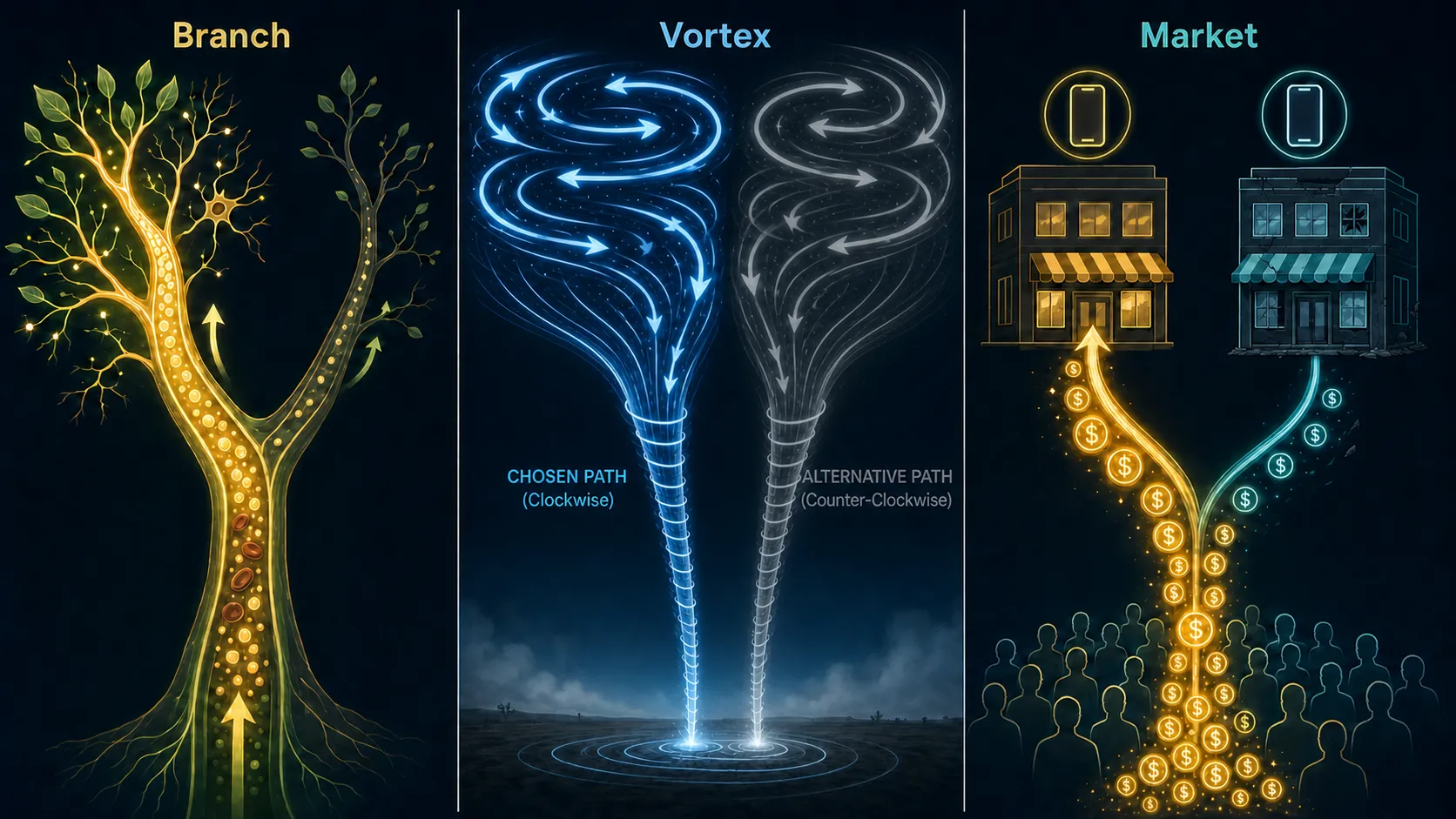
The non-obvious examples are the ones that do not look like a tree at all. The organs in your body (blood), the organelles in your cells (ATP), and the companies in our economy (money) are competing adaptive energy dissipation flow structures each assembled via a flow particle that directly gates access to free energy.
Companies compete for the flow of money, the particle that gates access to free energy dissipation in our economy, and most of them lose and die while only a few remain (positive feedback). A monopoly is like a collapsed kT-bit—a single money dissipation pathway—like the final large bolt in the lightning above. The competition that built the structure is over and the alternative pathways are dead, so what remains looks stable and powerful while it has quietly thrown away its degrees of freedom. But this makes it brittle. When the world changes, i.e. the source of free-energy is depleted, a fully collapsed structure has nothing left to explore with, because it already burned its options down.
Alex Wissner-Gross has framed intelligence as “a force that acts to maximize future freedom of action”. A fully collapsed kT-bit is what’s left when all that freedom has been spent. Equate the two and you reach an interesting conjecture. Intelligence arises from alive, non-collapsed kT-bits still exploring their options. What intelligences leaves in its wake are collapsed structures, no longer intelligent, because the freedom has been spent on one defined solution—efficient but brittle.
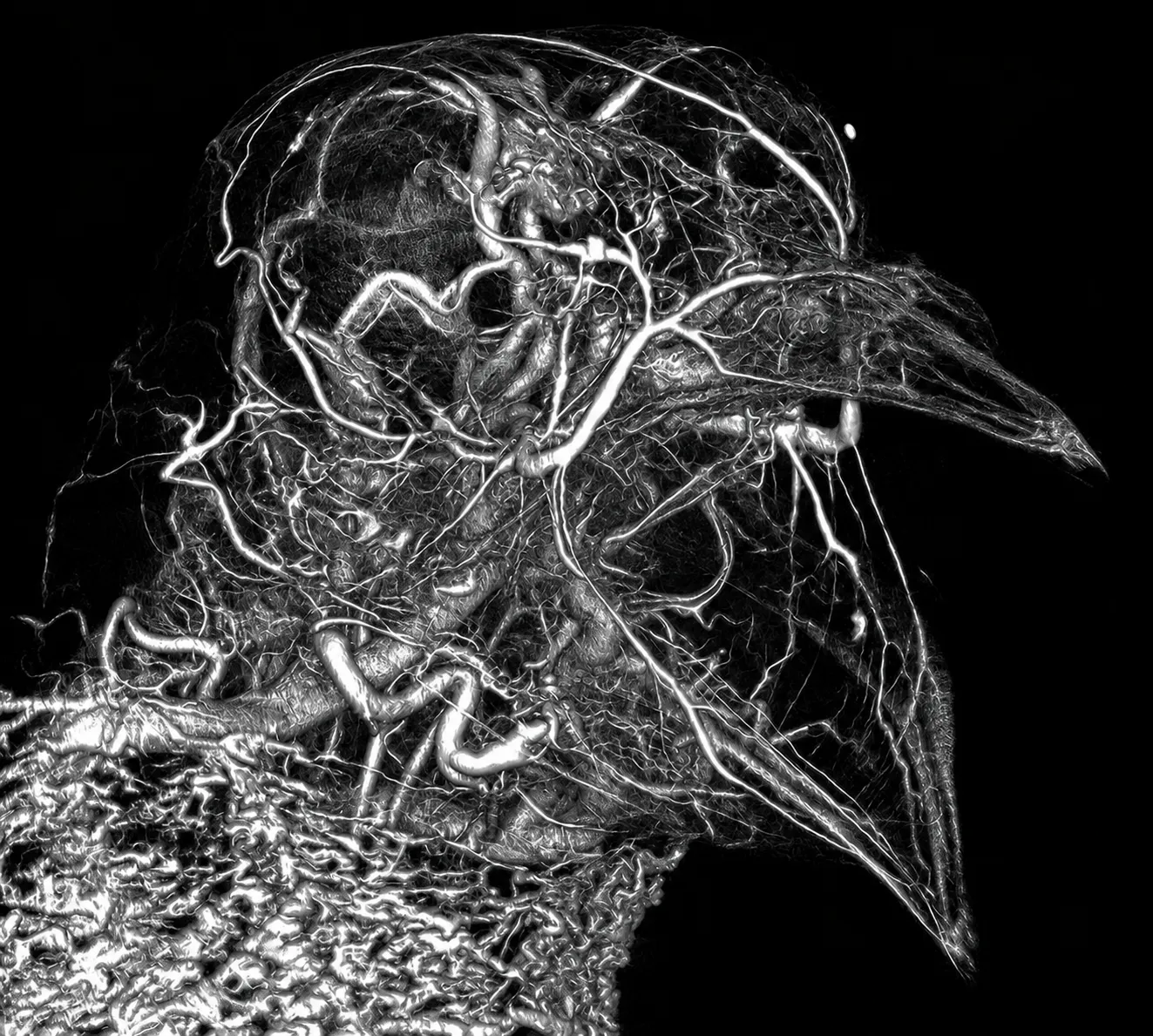
If a structure can’t find more free energy to dissipate, and thus repair itself, it starts to die and break apart, establishing new competing pathways. As competition is restored, the pathways start fighting over the flow again, the degrees of freedom come back, and the system can build new structure once more, locking onto a new pattern that dissipates free energy better.
If you eliminated kT-bits from Nature, there would not be much left. Even when something does not look like a kT-bit on the surface, if you look closer, or take a step back, you can usually find it. You might even be a part of a larger one, or the particle flowing through it, or standing in the remnants of a collapsed one. It’s kT-bits all the way down.
So go outside and touch some grass. For the next day, every branch and every swirl you walk past—the tree over the sidewalk, the vortex in your coffee, two companies fighting over the same customers—stop and ask some questions.
Page 42#
Turing was reaching for the same ideas in “The Chemical Basis of Morphogenesis.” He showed that a perfectly homogeneous, symmetric system—a uniform chemical soup at equilibrium—can be unstable, and that structure emerges only when small disturbances trigger an instability and one component grows at the expense of the others. A symmetric system stays symmetric forever unless this happens; but when it does, Turing notes, “a new and stable equilibrium is usually reached, with the symmetry entirely gone” (p. 42). That is a kT-bit collapse described in the language of reaction-diffusion chemistry. The homogeneous state is the non-collapsed bit, carrying every pattern at once; the instability is the competition between dissipation pathways; and the stationary wave that finally appears is the collapsed structure—the one structure that captured the flow while its competitors died. The collapse selects structure from a mixture, by eliminating alternatives that dissipated less energy. Turing noted the degrees of freedom contract: “the variety of such new equilibria will normally not be so great as the variety of irregularities giving rise to them” (p. 42)—many possible disturbances in, one surviving structure out. That selected structure is fit to the conditions that produced it, and brittle for exactly the same reason: the alternatives needed to adapt to a changed environment are the ones that died. As Turing says, “in order to maintain the wave pattern a continual supply of free energy is required” (p. 66). When the continual supply of free energy is spent, the structure dies, unable to adapt. Such is life.
You want to know the answer to life, the universe and everything? It’s right there on page 42. Go figure.
Bit, Qubit, kT-Bit#
Modern computing has the ‘bit’, quantum computing has the ‘qubit’, and thermodynamic computing has the kT-bit. There are endless ways to construct kT-bits, and they have a tremendous advantage over qubits.
Quantum computing is an attempt to compute with a substrate of physics, which I believe is the correct instinct. Shor’s algorithm is a real result, and the physicists chasing it are not fools. The problem is that a qubit collapses if you so much as look at it. To keep one coherent you have to isolate it from the world more completely than the vacuum of deep space, chill it to a fraction of a degree above absolute zero with significant costs of energy—and even then it barely holds together long enough to compute anything. After decades and untold billions, the qubit perpetually exists in its own kind of superposition: absurd and brilliant at once, and always just around the corner. It has strong “trust me bro” vibes. You cannot see it or touch it; you have to take it on faith that it is there. And its prime selling point has been fear—the promise that one day it will crack the encryption that guards the world’s secrets and, with them, the financial stability of the planet. That is a hell of a foundation to build a field on.
The kT-bit is the opposite animal. You can touch it, build it, examine it, and watch it work at every scale. You do not need a billion-dollar lab or a cryostat; you need a flow and something for it to carve. You can build one out of damn near anything—water, plasma, memristors, even money—and operate it across a vast range of temperatures and substrates. Nature abhors the qubit and snuffs out its coherence as fast as it possibly can. Nature is built from kT-bits, and assembles them for free, everywhere, all the time, under a staggering range of conditions. The qubit is forever almost here. The kT-bit is already here, and there, and everywhere you look.
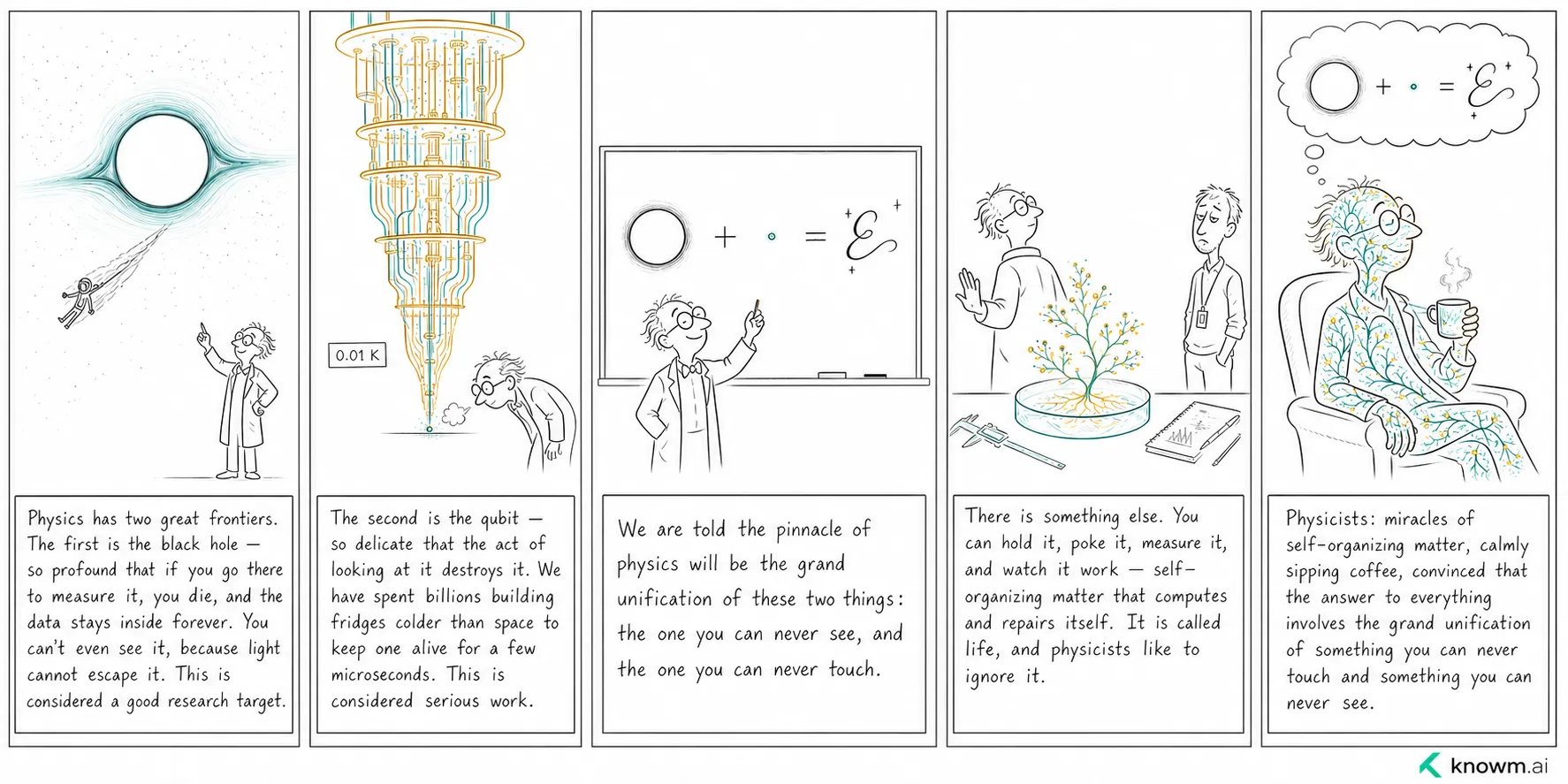
The bit won for a reason. It lets us operate in our idealized mathematical worlds while it quietly absorbs the thermodynamic fluctuations we did not know how to deal with. Every wire collapses a messy continuum of voltages down to a clean 0 or 1, and in doing so it throws away a tremendous amount of information and probabilistic potential—on purpose. That discarded noise is exactly what lets us stack billions of these things together. That was the hard-earned lesson of the bit: build the machine so the real world’s noise falls away from our idealized math. But what if we brought our math to the noise?
Nature is offering an alternative to anybody who cares to look. So let’s take the hint and see how far the rabbit hole goes, shall we?
Memristor = ½ kT-bit#
Nature builds everywhere with adaptive pathways that carry a flow and are reshaped by it. A memristor is one of those pathways, manufactured: a two-terminal device whose resistance is set by the history of charge that moved through it, its conductance the memory of the flow. The same idea as the branch and the riverbed, shrunk down to something we can fabricate, wire up, and drive on demand.
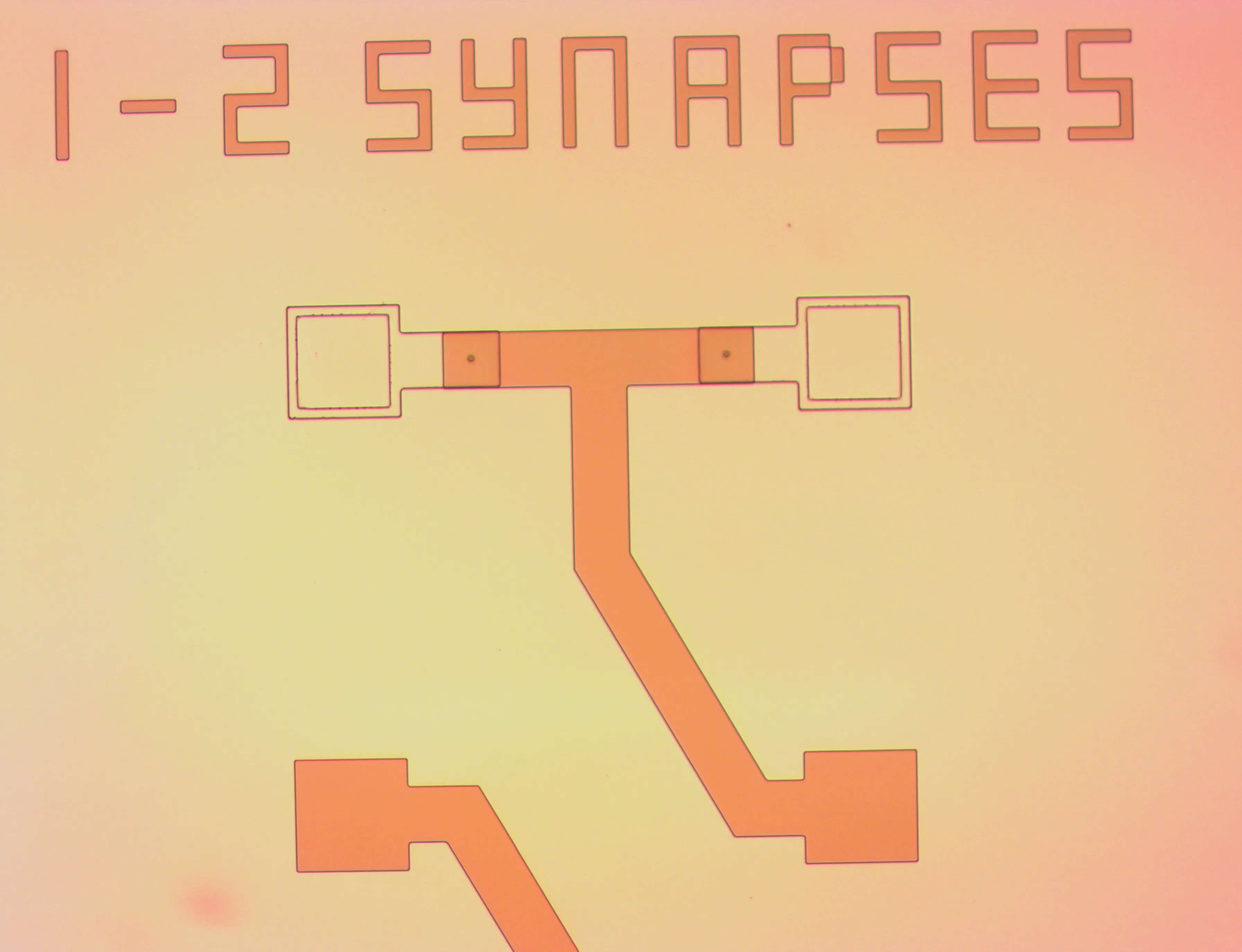
A single pathway only remembers. It takes two to make a choice. So we put one memristor on each fork of a branch. The pair is a kT-bit. Electrons flow down the branch and split between the two memristors. We make the memristors compete for reward currents. Now we have control. Anti-Hebbian feedback drives the kT-bit back into a mixture. Hebbian feedback collapses it.
Both of those moves are the same synapse chasing one thing—the most dissipation it can manage. We worked out the power it burns in each configuration for the PLOS ONE paper (Table 7):
| Condition | Ga | Gb | Max power |
|---|---|---|---|
| Path A selected | k | 0 | ½·kV² |
| Path B selected | 0 | k | ½·kV² |
| No feedback | k/2 | k/2 | ⅛·kV² |
When feedback rewards one fork, the synapse dissipates the most by throwing all its conductance onto that fork: one memristor full on, the other at zero. When no feedback comes, the most-dissipating configuration is the even 50/50 split, both memristors half on, and the output descends into randomness. Same drive, two regimes: find a dissipative path and the way to burn the most energy is to commit to it (Hebbian, collapse); find nothing and the way to burn the most is to spread out and search (anti-Hebbian, mixture).
Thermodynamic-RAM (kT-RAM)#
kT-RAM is the generic name we use for a computational structure that lets one or more kT-bits interact with each other in a controlled manner. It’s just a big collection of kT-bits where we can co-select some subset of them and drive them with various voltage patterns, which we call kT-RAM instructions. You could just as well call it a “Thermodynamic Processor”—the memory and the processor are the same fabric, so the von Neumann split between them never happens. Whatever you call it, a whole world of computational primitives emerges from it. We will build a kT-RAM emulator together in code and I’ll guide you down a few paths, most notably a “Neural Lane”, since I have the crossbars—and the time—to build one.
In the neural network framing, that same kT-bit is a synapse. A collection of synapses that are selected and driven together is a neuron. A transform is the level at which the neurons interact. Although the kT-bit is surely our building block, when we are done with the ASSIMILAATE core we will have abstracted it away and will be working more directly with transforms. We can’t abstract something until we instantiate it, so we have no other options but to start at the bottom and work our way back up.
We will dynamically couple kT-bits together to form logic gates and their non-collapsed progenitor, the “self-organizing logic gate”, and explore how to perform unsupervised and supervised learning tasks. We will simulate and physically build a larger computational structure I call a “neural lane” (one of many kT-RAM topologies) that will hold many neurons that can be spatially and temporally multiplexed. If I’m up to it, we may even take the hardware all the way to a full core, where multiple neural lanes come together and the ASSIMILAATE layer transforms are learned. If I’m not up to it, we may only get there in software emulators.
Cite this article
Alex Nugent (2026). The Thermodynamic Bit. Knowm Inc.. https://knowm.ai/blog/thermodynamic-bit/
@misc{nugent2026thermodynamic,
  author       = {Alex Nugent},
  title        = {The Thermodynamic Bit},
  year         = {2026},
  howpublished = {Knowm Inc.},
  url          = {https://knowm.ai/blog/thermodynamic-bit/}
}